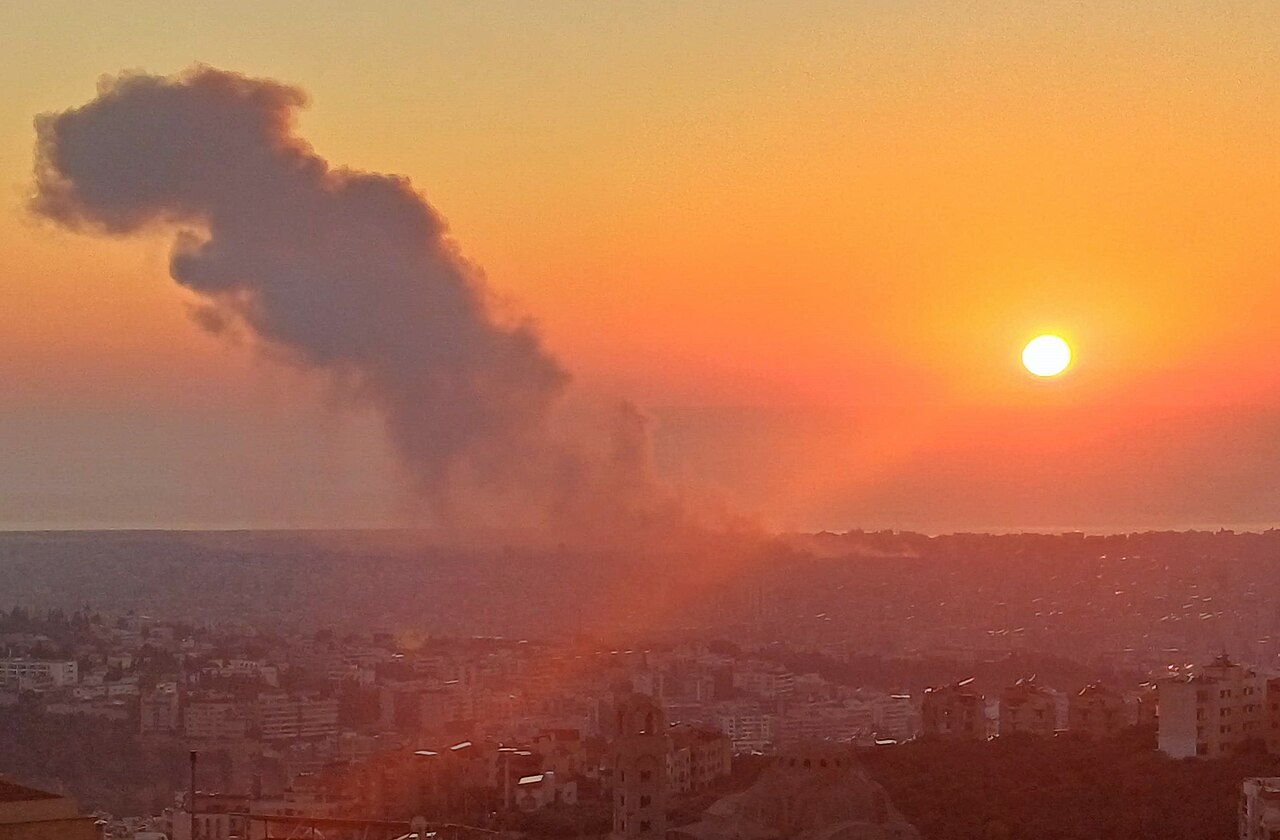
Israel's October 2024 Strikes on Tehran: Navigating the Nuances of Limited Retaliation
The intricate dance of geopolitical tension between Israel and Iran reached a critical juncture on October 26, 2024, when Israeli forces launched a series of strikes against military targets in Iran. Officially termed "Operation Days of Repentance" by the Israeli military, these frappes israéliennes Téhéran were explicitly stated as a response to Iran's significant missile assault on Israel earlier that month. Described unequivocally as "limited," these actions marked a calculated decision to restore deterrence without igniting an all-out regional conflict. Understanding the context, execution, and implications of these strikes requires a deep dive into the escalating events that preceded them and the strategic calculations that shaped Israel's response.
The Precursors to Retaliation: A Volatile Timeline
To grasp the significance of the October 26 strikes, one must first revisit the tumultuous events that set the stage for such a direct confrontation. The region had been simmering with heightened tensions, a powder keg waiting for a spark.
Iran's October 1st Barrage: A Direct Challenge
Barely a month before Israel's retaliatory action, on October 1, 2024, Iran launched an unprecedented missile attack on Israel. This offensive, delivered in two waves, saw more than 180 missiles, and by some accounts over 400 ballistic projectiles, targeting critical Israeli military installations. Among the most significant targets was the Glilot base north of Tel Aviv, home to the headquarters of the Mossad intelligence agency and the elite Unit 8200. Explosions reverberated across Tel Aviv and Jerusalem, sending shockwaves through the region and beyond.
Israel, with robust support from its allies—including the United States, France, the United Kingdom, and Jordan—managed to intercept the vast majority of these incoming threats. However, the attack was not without consequence, claiming the life of a Palestinian in Jericho, occupied West Bank, who lacked access to anti-aircraft shelters, and injuring several others by missile fragments.
This aggressive act by Iran was itself a response to a series of highly provocative events attributed to Israel. Key among these were the assassinations of Hamas chief Ismail Haniyeh in Tehran on July 31, 2024, and Hezbollah Secretary-General Hassan Nasrallah during the bombing of the organization's headquarters on September 27. Compounding these losses was an ongoing Israeli ground offensive in Lebanon and intense bombardments that had plagued the country since September 23. This marked only the second time Iran had directly attacked Israel on its soil, following a similar incident on April 13, 2024, signaling a dangerous shift in the proxy conflict dynamics.
International Diplomacy and Restraint
In the aftermath of Iran's October 1st assault, Israel faced immense pressure and complex choices regarding its response. Initial considerations within Israeli defense circles reportedly included targeting Iran's nascent nuclear program and critical oil facilities – options that, if pursued, would undoubtedly have escalated the conflict to an unimaginable scale. However, these more drastic measures were ultimately shelved following extensive negotiations and strong admonitions from the U.S. government. The Biden administration, acutely aware of the potential for a full-blown regional war and with U.S. elections just weeks away, expressed profound concerns that such actions could destabilize the entire Middle East. This international pressure played a crucial role in shaping Israel's decision to opt for a more calibrated and contained response, focusing on deterrence rather than widespread destruction.
Operation Days of Repentance: A Calibrated Response
The Israeli response, when it came, was a carefully orchestrated maneuver designed to send a clear message without crossing the threshold into outright war. This strategic restraint is what defines the nature of these Tehran under Fire: Understanding the Latest Israel-Iran Escalation events.
The Scope and Execution of the October 26 Strikes
In the early hours of October 26, 2024, the Israel Defense Forces (IDF) commenced aerial strikes targeting military assets within Iran. The IDF confirmed that approximately one hundred combat aircraft were involved in "Operation Days of Repentance." A crucial element of this operation's limited nature was the tactical decision to avoid entering Iranian airspace. Instead, Israeli warplanes launched their missiles from a standoff distance of 70 to 100 kilometers from the Iranian border, employing advanced precision weaponry to hit their intended targets.
This approach underscored Israel's intent to demonstrate its capabilities and resolve, while simultaneously signaling a desire to prevent uncontrolled escalation. The strikes were officially framed as a direct response to Iran's October 1st aggression and to the ongoing militant actions carried out by members of the "Axis of Resistance" – a network of Iranian-backed groups operating across the region.
Casualties and Public Reaction
The limited scope of the strikes was reflected in the reported casualties. Iranian authorities confirmed the deaths of four military personnel from the Islamic Republic of Iran Air Defense Force: Mohammad-Mehdi Shahrokhi, Hamzeh Jahandideh, Sajjad Mansouri, and Mehdi Naghavi. Additionally, one civilian, Allahverdi Rahimpour, was also killed. These casualties, while tragic, highlighted the targeted nature of the operation, particularly against air defense units, rather than a broad assault on urban centers.
Social media quickly became a platform for circulating videos purportedly showing missile interceptions by Iranian air defenses over Tehran. While the extent of damage remained limited, these images fueled both public anxiety and nationalistic fervor. The visible interceptions suggested that while Israel's strike was precise, Iran's defensive capabilities were also engaged, creating a complex narrative of both impact and resistance. The international community largely observed these Operation Days of Repentance: Analyzing Israeli Air Strikes on Iran with bated breath, hopeful that the "limited" nature would indeed prevent further, more destructive cycles of retaliation.
Analyzing the "Limited" Approach: Strategic Implications
The choice of a limited response was not arbitrary; it was steeped in strategic considerations aimed at navigating a perilous geopolitical landscape.
The Message Sent: Deterrence Without Escalation
Israel's decision to employ a "limited" strike strategy was a calculated gamble, attempting to achieve a delicate balance: demonstrating its unwavering capacity to retaliate and restore its deterrence posture, while simultaneously avoiding an all-out, catastrophic regional war. By striking specific military targets, particularly air defense assets, Israel sent a clear message about its intelligence capabilities and reach, even without direct penetration of Iranian airspace. This approach aimed to communicate that while Israel possesses the means for a more extensive assault, it chose restraint, thereby providing an off-ramp for de-escalation rather than pushing Iran further towards a full-scale response. The calibrated nature of these frappes israéliennes Téhéran was arguably designed to preserve some semblance of stability, albeit a fragile one.
The Role of Air Defense Systems
The exchange of fire also provided a stark demonstration of both nations' air defense capabilities. Israel's multi-layered defense system, featuring the Iron Dome, David's Sling, and Arrow systems, proved highly effective in intercepting Iran's earlier, extensive missile barrage. In contrast, while videos showed Iranian air defenses engaging and intercepting some incoming Israeli missiles, the fact that casualties occurred and specific targets were hit indicates that Israel's advanced standoff weaponry managed to penetrate at least some layers of Iran's air defense network. This ongoing technological arms race in air defense and offensive missile capabilities remains a critical factor in the regional power balance, influencing future strategic decisions on both sides.
Looking Ahead: The Fragile Balance of Power
The October 2024 strikes, while termed "limited," are unlikely to be the final chapter in the ongoing saga between Israel and Iran. They merely represent a particular phase in a deeply entrenched and complex conflict.
Potential Repercussions and Future Scenarios
The cycle of retaliation in the Middle East is a dangerous one, often leading to unintended consequences. While the "limited" nature of Israel's response might temporarily lower the immediate risk of an overwhelming Iranian counter-attack, it does not eliminate the underlying grievances or the potential for future escalation. Iran may feel compelled to respond in some manner, perhaps through its proxies, to save face or to reassert its own deterrence. The continued actions of the "Axis of Resistance" will remain a flashpoint, providing avenues for indirect confrontation that could rapidly spiral out of control. The stability of Lebanon, Yemen, Syria, and Iraq, where these proxies operate, will continue to be heavily influenced by this strategic rivalry.
The Global Stake in De-escalation
The international community remains deeply invested in preventing a full-blown conflict. The specter of a wider war involving major powers, disrupting global energy markets, and triggering a humanitarian crisis of unprecedented scale, underscores the urgency of de-escalation efforts. The upcoming U.S. elections add another layer of complexity, with both sides potentially calculating how future U.S. foreign policy might impact their strategic calculus. Diplomatic channels, even if strained, must remain open to manage this high-stakes standoff.
The Israeli strikes on Tehran in October 2024, under the banner of "Operation Days of Repentance," illustrate the perilous tightrope walk of modern geopolitical conflict. By delivering a "limited" response, Israel aimed to re-establish deterrence following Iran's direct missile attack, while skillfully avoiding the catastrophic consequences of a full-scale war. The precision targeting, the standoff launch, and the relatively contained casualties were all calculated moves in this complex game of chess. However, as the region remains gripped by an intricate web of historical grievances, proxy conflicts, and strategic ambitions, the delicate balance of power constantly teeters on the brink. The ongoing challenge for both Israel, Iran, and the international community lies in finding pathways to de-escalation and long-term stability, ensuring that these "frappes israéliennes Téhéran" do not merely serve as a prelude to a far more destructive confrontation.